
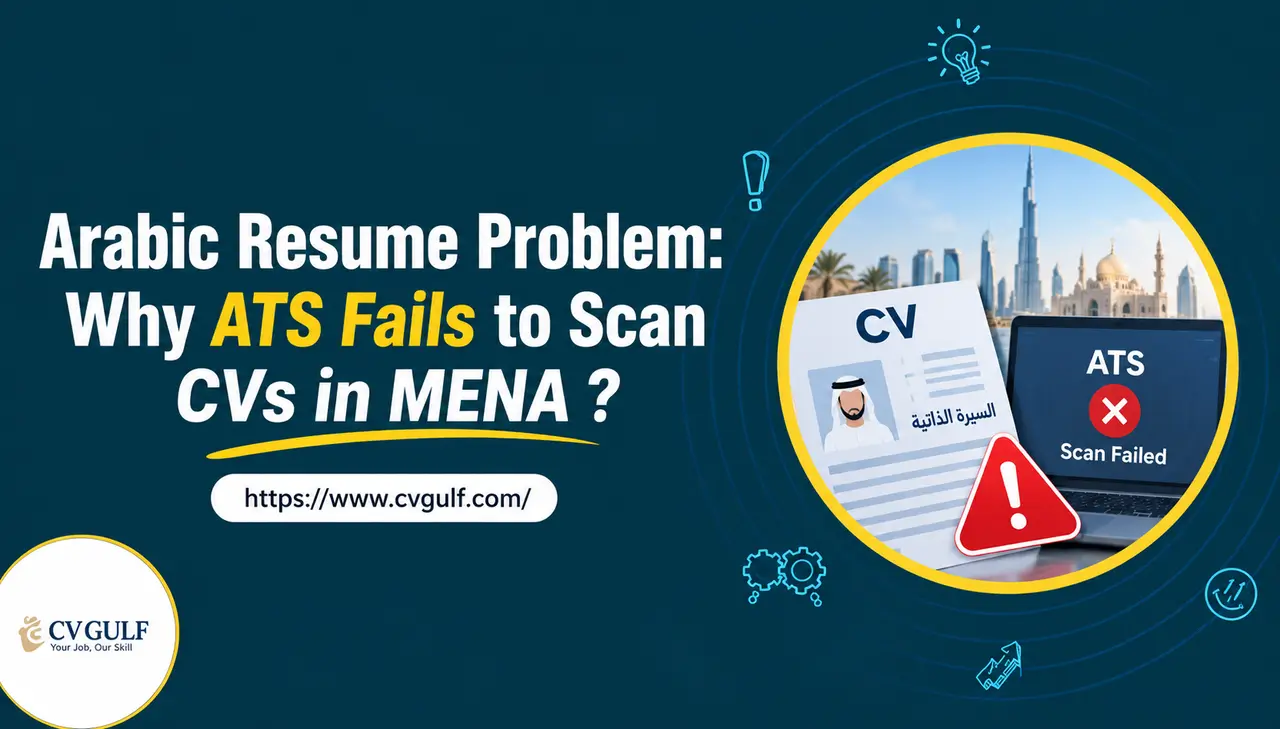
The Arabic Resume Problem: Why ATS Fails In MENA
Arabic CVs can sometimes be met with surprising difficulties when being processed by an applicant tracking system. Learn about the reasons for the difficulty of ATS software in processing Arabic resumes in MENA and what employers should do.
 Key Takeaways
Navigating The Complex Arabic Resume ATS Landscape
The modern recruitment process in the Middle Eastern region is highly dependent on automated recruitment software that is used to process thousands of applications on a daily basis. Yet, the regional job portals often find it difficult to process native scripts efficiently due to complicated software structures underneath.
Automated screening software has inadvertently made things difficult for talented local professionals. This is because of structural text orientation, specific typography, and multilingual entries that often lead to parsing errors in the screening software.
Knowing about these technical Arabic resume problem will allow candidates to better prepare themselves for their application process and also allow recruiters to streamline their selection process. This will help in providing equal career opportunities to all potential candidates.
Understanding How ATS Software Processes Resumes
Automated screening platforms are designed to break files of new candidates down into plain text files to be indexed in the database. These systems classify the applicant’s work experience, education, and abilities to enable faster application screening.
With keyword matching, recruitment software can automatically match candidate profiles to specific requirements for the vacancy. If the file format fits nicely with the system, then the system gives the application a higher rank for human reading.
Most of the worldwide screening tools, however, were created to fit Western languages and document left-to-right designs. This architectural bias results in a systematic Arabic resume ATS mismatch while extracting profiles during automated processing.
Why Arabic Resume Formatting Creates ATS Challenges
Standard digital parsing tools have a major technical problem with documents that are oriented “right-to-left.” Scripts that can extract the text may reverse the lines of text, rearrange the sentences, and provide missing contact information.
During document ingestion, OCR software is further confused by the complexity of character linkages and calligraphic variations of glyphs. Candidates sometimes use non-standard fonts, which commonly cause words to be illegible as symbol strings.
Removing multi-column designs, decorative borders, and embedded graphics keeps documents readable for parsing systems. A clean Arabic resume template ATS friendly ensures the important qualifications of a candidate are captured by automated tools.
The Impact Of Arabic Language Complexity On Resume Parsing
The Arabic language uses complex root systems and a large number of prefixes and suffix modifications, making simple keyword matching difficult. Common database queries don’t always catch all the nuances of the basic terms found in different dialectical contexts.
If the text is transformed into something else, it tends to alter the meaning of words due to discrepancies in character encoding and the absence of diacritics. Moreover, various spellings used in different regions cause some inconsistencies in the match between a candidate’s profile and a published job posting.
All these problems illustrate more fundamental difficulties encountered by Arabic resumes in the automated talent management system. The consistent use of terminology helps identify matching information within automated databases.
Why Bilingual Arabic-English Resumes Can Confuse ATS
The use of a right-to-left script together with text in a left-to-right script, such as English, on a single page can cause text extraction engines to become unstable. Alternating language directions lead to parsing algorithms mistaking line breaks and creating scrambled sentences.
The translation inconsistencies that often result from the direct translation of regional job titles to international corporate titles can cause keyword score mismatches. If candidates use multiple languages in a sentence, system parser confidence metrics are greatly diminished.
A balanced bilingual resume strategy helps to safeguard the integrity of applications on both single- and dual-language job markets. Clean separation of language blocks enables recruitment engines to successfully index both scripts.
How ATS Fails Arabic Resume Affects Job Seekers Across MENA
Very skilled professionals often end up getting an automated rejection email before their time due to technical parsing errors. When the recruitment databases don’t get the correct information about the experience, the strong candidates are hidden from the hiring panels.
Regional roles are difficult to find for cross-border jobs when terms are subject to different interpretations across the country and internationally. The absence of candidate information in the system affects the automated shortlist and puts artificial caps on career progression for regions.
Candidates with a perfect job fit find themselves very frustrated when their Arabic resume rejected by ATS. These screening mistakes can be resolved to ensure that candidate evaluations are based on merit, not technical problems.
Why Employers And Recruiters Must Understand Arabic ATS Limitations
The danger with blindly hiring candidates based solely on their automated screening scores is that you might miss the best talent from the region. Recruiters can gauge the processing speed of different software and tailor their filters and candidate selection accordingly.
Properly conducted system audits using sample applications from different regions regularly detect technical issues in the recruitment system in use. Awareness of the structure of languages used in each region within the software may assist in creating a more durable pipeline for talent acquisition.
Determining the factors that why ATS fails in MENA should prompt HR managers to constantly monitor their system. This is made possible through the manual review process together with automatic monitoring.
How To Make An Arabic Resume More ATS-Friendly
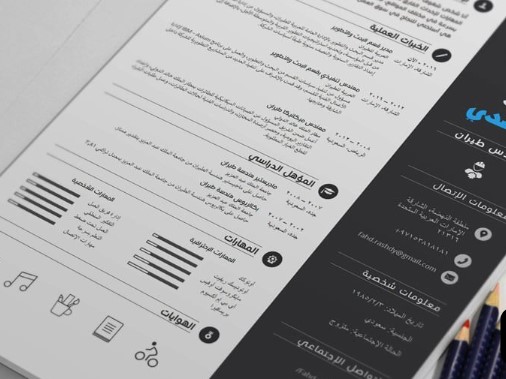
A simple single-column design guarantees that experience data can be correctly extracted in chronological order by document parsing algorithms. The uniform margins, line spacing, and section headings ensure that automated text readers don’t miss out on essential candidate data.
With clean, digital-ready typography, each letterform will be legible in a variety of operating environments. A professional Tajawal font resume format offers crisp glyph readability that enhances the level of accuracy in automated parsing of the text.
Saving the application in the form of simple/plain text and document format helps to prevent any substitution of fonts while uploading. Proper selection of place ensures that the qualification of the candidates can be processed digitally without any corruption.
Best Practices For Creating Bilingual Resumes For MENA Employers
When organising bilingual documents clearly with visual section dividers, there will be no text direction conflicts when scanning with software. Having English and Arabic sections together in order, instead of side by side, maintains the correct reading order for automated tools.
Local job titles and internationally recognised job titles will contribute to the efficiency of the database indexing on global portals. When using multiple languages, it is important to stick to the same language throughout the individual sections to ensure that automated readers correctly categorise candidate history.
By using a proven GULF CV layout, the formatting will match the expectations of the regional recruiters. A consistent format makes it easy for human recruiters to read and easy for programs that are designed to interpret applicant information.
How HR Teams Can Reduce Arabic Resume Screening Errors
HR leaders should test regional recruitment software with a variety of documents to gauge real-life accuracy of extraction. Testing platform performance with different kinds of files can help organisations understand which software might have limitations before they go on a large-scale recruitment drive.
By changing the ATS search engine algorithm to include exceptions for Arabic prefixes and spelling variations, accidental candidate filtering is avoided. By educating talent acquisition teams on parsing, you can make sure that incomplete profiles are reviewed by humans.
The real Arabic resume ATS pass rate provides companies with actionable data to enhance the hiring process. Organisations can always benefit from the best recruitment professionals in the region by switching to multilingual recruitment platforms.
Choosing The Best Arabic Fonts For Resume Readability And Compatibility
Clean and widely available typefaces guarantee that candidate credentials are completely readable on a range of automated recruitment software solutions. Choosing the best Arabic fonts for resume when you begin formatting your resume helps avoid distortion and overlapping letters in your resume.
Standardised digital typefaces do not lose their structure when they are converted to unformatted database text entries on servers. Optical Character Recognition tools are easy to process, and high-contrast font options make it easy.
It is better to focus on the digital readability of your document than on fancy calligraphy, as this helps to avoid severe problems in ATS fails Arabic resume screening. Proper typography ensures that key information, such as your qualifications, is properly indexed without compromising your contact or background information.
How To Create A Bilingual Arabic-English CV For International Opportunities
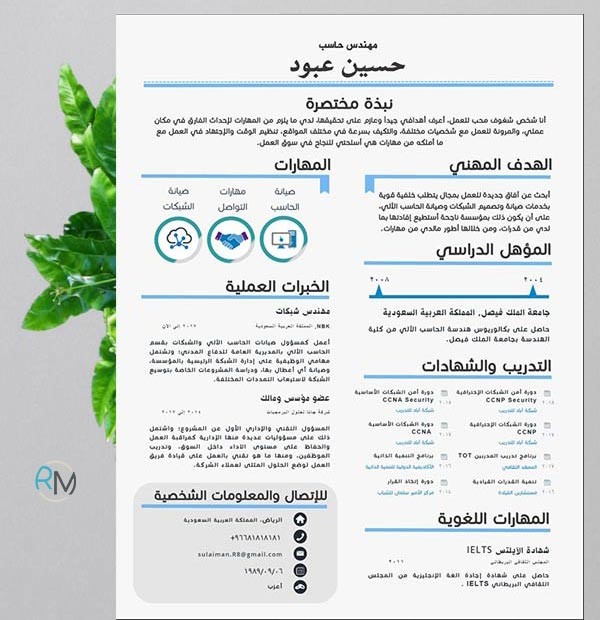
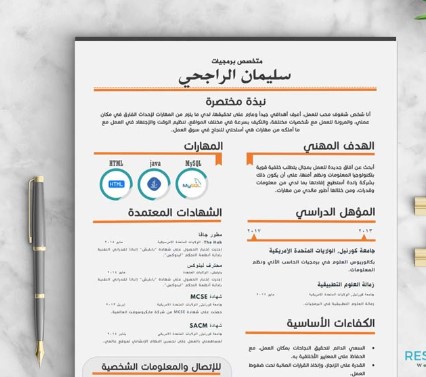
Well-organised dual-language application documents make a good impression on both domestic and foreign employers. A balanced bilingual Arabic english CV helps job seekers convey important skills to various hiring committees.
Language sections in the database, added in an organised way, will minimise confusion about text direction between right-to-left and left-to-right languages when parsing the database. Language separation will enable candidates’ profiles to go through the automated language separation without any form of corruption or line skips.
Using a dual-language application improves the likelihood of candidates being noticed in competitive Middle East job markets. A well-sculpted document will make it easier to assess your actual value to the recruiter without technical issues.
Unlocking Regional Talent With Modern Font Choices
The choice of modern digital typography is essential to solving challenges of recognising characters from historical documents in resume parsing software. A clean font structure ensures that Arabic characters separate easily from each other into strings of text during database indexing.
A modern Cairo font resume layout will give you well-proportioned character spacing, which will make it easier to read for human eyes. Modern typefaces look good on all screen sizes and still look good within automated applicant databases.
A CV maker Kuwait can provide you with a well-structured layout that ensures your CV adheres to specific regional formatting requirements. Good typography helps people skip the parsing friction and makes candidate profiles flow through automated screening systems.
Optimising Digital Documents For Regional Career Mobility
The challenge is to make candidate documents regionally relevant for recruitment while maintaining their machine readability. Applicants who are applying for jobs in multiple regional markets should make sure that their documents are in accordance with the software requirements.
Candidates seeking employment may take advantage of the knowledge of professional CV writers in Oman to develop CVs that are up to standard and appropriate to the candidates’ target industries. Such mistakes in the layout are avoided, and hence the information of the candidates is widely spread.
The removal of complex design elements makes sure file structures are steady when handled by worldwide recruitment portals. Structuring digital documents effectively can be the key to success in a competitive job market.
Enhancing Character Recognition With Classic Arabic Typography
The Arabic typefaces used in traditional Arabic books are also well suited for digital Arabic text formATS, as they have more balanced proportions. Consistent character height and weight reduce the possibility of optical parsing tools being confused by connected sequences of characters during ingestion.
The classic Amiri font resume design gives a stylish look to your resume and provides basic alignment throughout standard software. Crisp, clear stroke definitions allow character recognition engines to accurately index individual words, without producing garbled output.
Decorative calligraphic styles should be avoided, as this will prevent document information from being read or ignored by automated filters. Professional font selections help create a polished image and are easily readable on a computer screen.
Resolving Font And Layout Friction In Parsing Systems
One of the most common reasons for corruption of candidate profiles is technical incompatibility of custom fonts with parsers in the database. Using the same font for documents helps avoid errors in text replacement that can make it hard to pick out contact information and work history for candidates.
Solving the root problems of font and typography incompatibility eliminates potential problems with algorithms in the system that may lose important context. The basic typography features ensure that document style is consistent across a variety of software applications.
Font stability is achieved through testing of application files using a number of digital conversion programs prior to uploading. With the elimination of the typographical barrier, recruitment systems are able to accurately assess the skills and qualifications of candidates.
Overcoming Search Filter Discrepancies In Regional Hiring
Automated screening tools are largely dependent on exact term matching, and this is of limited use with rich Arabic vocabulary screens. Many times, the text of the job post does not match exactly with the text in the candidate’s CV, and this can result in misleading relevance scores.
To solve the keyword matching failures in Arabic resumes, candidates should add industry-specific vocabulary to their profiles. Repeating keywords from the jobs posted in job ads enables the automated search engine to match the skills of the applicant to current job requirements.
Optimising keywords improves candidate profiles’ match scores within employer databases. Strategic vocabulary selection bridges the gap between candidate experience and automated search filter logic.
Comparing Regional Application Strategies For Maximum Reach
For job seekers, the decision between submitting documents in a local language or English can often be a difficult choice in Middle East markets. Researching the particular needs of target employers enables candidates to determine which document format they need to choose for each application.
Arabic CV vs English CV Gulf applications require a candidate to be familiar with the distinctions in presentation to fit the organisational culture. International companies may opt for English documentation, while the public sector may value clarity in Arabic documentation.
Applying the right document strategy to the right markets can have a significant impact on application success rates. Being flexible in how you apply doesn’t mean you can’t communicate how valuable you are to a variety of panels.
Improving System Reliability For Accurate Candidate Evaluation
The recruitment systems should be adaptable to support complicated regional languages, without casually discarding high-quality applications. With the upgrade of parsing engines, software algorithms can now match text accurately even if it is oriented and/or connected with characters.
Good system calibration and regional software testing are essential for ensuring that the Arabic CV ATS won’t block the upload of Arabic resumes. Automated errors in the recruitment system can cost organisations their best employees, and modernisation prevents that.
Strong parsing technology provides an effective and accurate screening solution for both employers and job candidates. System upgrades enable regional recruitment tools to accurately and fairly assess candidate potential.
Standardising Typography For Seamless Database Ingestion
A systematic test shows that standardised digital fonts significantly minimise character conversion inaccuracies during processing of files. When creating documents to upload, it is crucial to embed the font files properly to ensure that the candidate’s text doesn’t become illegible.
To overcome Arabic font ATS parsing issues, you need to choose widely used web fonts suitable for digital media. Standard fonts maintain character connections, which makes database readers read full sentences easily.
Using technology-enabled typography ensures that the information in the application stays intact on the way through automated recruitment processes. Smart fonts safeguard candidate information by ensuring hiring managers have accurate, fully parsed applicant profiles.
The Future Of Arabic Resume Screening In MENA
The evolution of natural language processing and regional machine learning algorithms is revolutionising candidate screening. Future ATS systems can handle right-to-left languages with greater precision and recognise localised industry terms effortlessly.
Using localised semantic search engines allows hiring applications to analyse candidate contexts instead of exact word matching. With these technological improvements, there will be fewer parsing mistakes, making digital recruitment environments more inclusive for regional economies.
Utilising real-world Arabic resume solutions ensures that recruitment technology not only facilitates but also contributes to regional workforce development. More intelligent algorithms help companies find outstanding candidates while giving job seekers a fair chance.
Read our other Articles :
Frequently Asked Questions
Why do ATS systems fail with Arabic resumes?
Issues that affect the use of an Arabic resume in some ATS include poor formatting, right-to-left language, character encoding, connection of Arabic letters, and use of two languages in one resume. This may result in difficulty in extracting text, data loss, and proper identification of skills and experience by recruitment software.
What is the ATS pass rate for Arabic resumes?
The ATS pass rate for Arabic resumes is very low, at 48%. The results are dependent on the recruitment software, the language used, the structure of documents, and the relevance of the keywords. Rather than using a hard-coded percentage, candidates should test their resumes to ensure that they are accurately extracting text and are compatible with the system.
Which fonts work best for Arabic resumes?
Arabic resumes can be written in Arial, Noto Naskh Arabic, and Traditional Arabic fonts, which are clear and Unicode-compatible. Use fonts that produce legible, joined characters and that don’t change when converted to PDF. Always test your document to confirm that it is being rendered consistently and that text is being extracted correctly.
How can I check my Arabic resume for ATS?
First of all, use a plain text editor to copy your resume text to determine if Arabic characters, headings, and contact information appear correctly. An ATS resume checker can also be used to determine formatting and parsing errors; keyword matching will be checked, and PDF extraction will be tested.
Conclusion
Overcoming the issues related to Arabic resume screening is an issue that can only be tackled through collaboration between job candidates and companies in the region.
Simple layout design, good typography, and proper keyword placement will aid job applicants in getting through the automated recruitment process.
On the other hand, companies need to understand the constraints of global software tools in handling RTL languages. Companies have to carry out system checks, manual checks, and upgrade software to prevent biased screening processes and ensure accurate evaluations.
This will ensure that recruitment practices are modernised to evaluate professionals based on their skills and not on how resumes are designed.

Amilah is a CV writer and career blogger at CV GULF who transforms standard CV documents into powerful professional stories. Through her regular insights on CV trends and cover letter writing, she provides jobseekers with a roadmap to navigate the modern job market. Aamilah’s expert tips are a go-to resource for anyone looking to increase their interview calls and secure better job offers.